
The semi-automatic gearbox occupies a unique place in the landscape of automotive transmissions. It is based on the architecture of a classic manual gearbox but eliminates the clutch pedal in favor of an electronic control unit. This hybrid positioning raises a measurable question: where does it stand in comparison to a manual gearbox and a conventional automatic gearbox in terms of comfort, cost, and longevity?
Semi-automatic, manual, and automatic gearboxes: comparative table of transmissions
Before analyzing the differences, a summary table allows us to visualize the structural differences between the three most common types of gearboxes on the market.
| Criterion | Manual gearbox | Semi-automatic gearbox (robotized) | Automatic gearbox (BVA / dual clutch) |
|---|---|---|---|
| Clutch pedal | Yes | No | No |
| Gear selection by the driver | Yes | Yes (lever or paddles) | Optional (M mode or sequential) |
| Clutch management | Manual (left foot) | Electronic (control unit) | Hydraulic or electronic |
| Number of clutches | 1 | 1 | 1 (classic BVA) or 2 (DSG, EDC, DCT) |
| Smoothness of gear changes | Variable depending on the driver | Average (possible jolts) | High (especially dual clutch) |
| Comfort in urban traffic | Low (frequent engagement) | Good (no clutch pedal) | Very good |
| Specific maintenance cost | Low | Moderate (actuators, controlled clutch) | High (BVA oil change, mechatronics) |
| Presence on the new market (2026) | Dominant (segments A/B) | Declining | Rapidly growing |
The findings call for some clarifications, particularly regarding the central column. To delve deeper into the subject, knowing everything about the semi-automatic car gearbox helps to grasp the mechanical subtleties specific to this transmission.
Architecture of a single-clutch robotized gearbox: what truly distinguishes it
The semi-automatic gearbox incorporates the components of a manual gearbox: two shafts (primary and secondary), pairs of gears, and synchronizers. The difference lies in the addition of electro-hydraulic or electromechanical actuators that replace the driver’s action on the clutch pedal and gear lever.
When the driver requests a gear change, the control unit briefly cuts the engine torque, engages the clutch, moves the synchronizers to the new gear, and then releases the clutch. The entire sequence relies on a single clutch, which explains the slight interruption time noticeable during the shift.
It is precisely this interruption time that differentiates the single-clutch robotized gearbox from a dual-clutch gearbox. On a DSG or EDC, the next gear is already pre-engaged on the second clutch, which virtually eliminates any torque interruption. The single-clutch semi-automatic gearbox cannot compete on smoothness, but it retains an advantage: its mechanics remain that of a manual gearbox, making it simpler and less expensive to repair.
Historical models and market diffusion
This technology has been widely used in European city cars: Citroën C3 SensoDrive, Smart Fortwo, Renault Twingo Quickshift, and Alfa Romeo Selespeed on sportier models. Ferrari has also utilized it in competition with its F1 gearbox. However, the production of new single-clutch robotized gearboxes has sharply declined in recent years, replaced by dual-clutch transmissions and, to a lesser extent, CVTs.
The used market remains the main territory for the semi-automatic gearbox. Several million equipped vehicles are still on the road, making an understanding of this technology relevant for any buyer of a used model.
Sequential mode on modern automatic gearbox: a frequent confusion
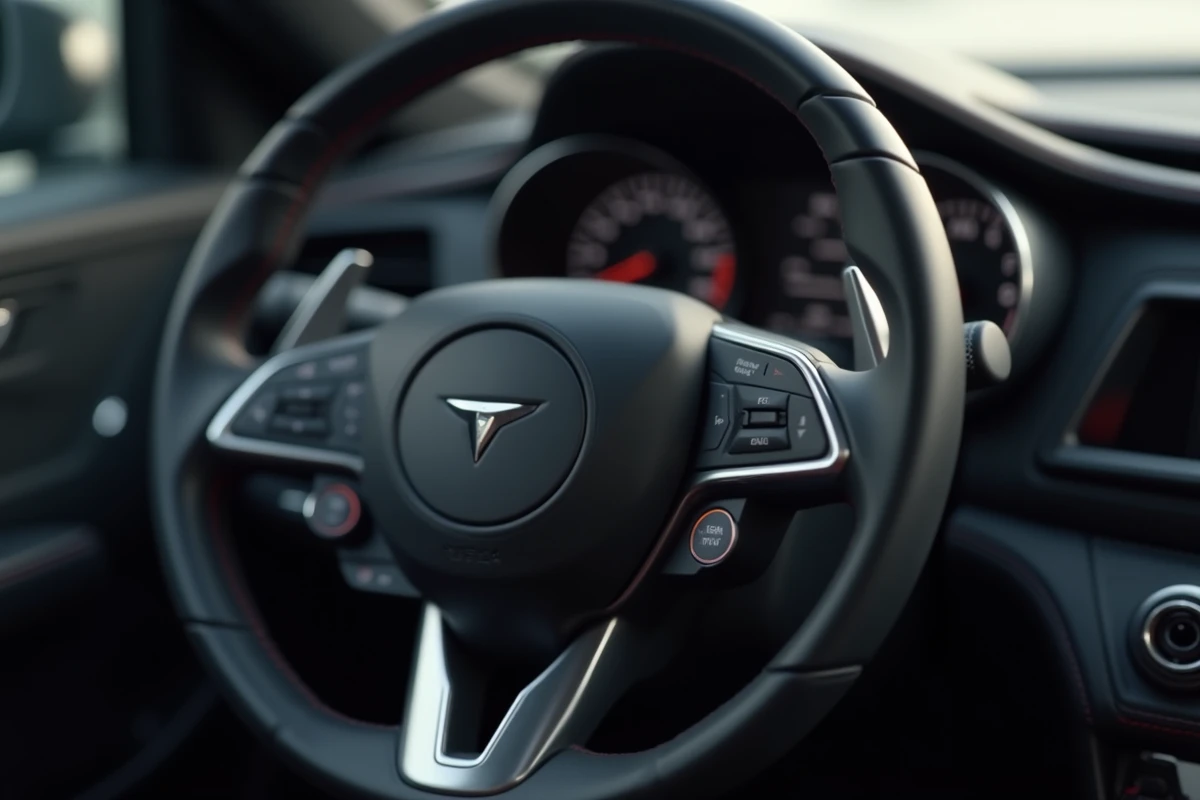
One point deserves to be isolated, as it generates massive confusion. On most recent automatic gearboxes (classic BVA, dual clutch, or even some CVTs), a manual or sequential mode (often noted M or S) allows the driver to upshift and downshift via the lever or paddles on the steering wheel.
This sequential mode gives a sensation similar to that of a semi-automatic gearbox, but the underlying mechanism is entirely different. It is a software sub-mode of a complete automatic transmission, not a single-clutch robotized gearbox. The gear change curves, torque management, and responsiveness are not comparable.
When a driver says “I have a semi-automatic” while showing the paddles of their recent car, they are actually using the sequential mode of an automatic gearbox. This nuance changes the game in terms of maintenance, replacement costs, and road behavior.
Maintenance and points of vigilance for a used semi-automatic gearbox
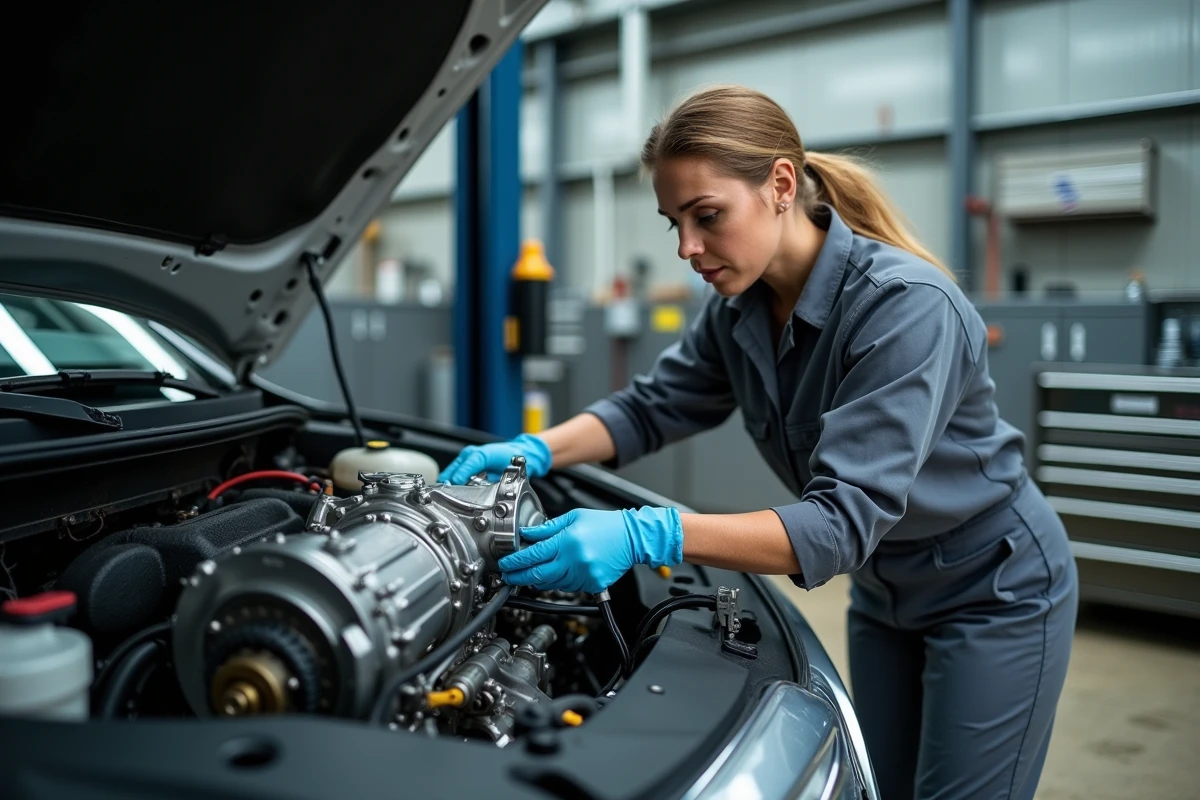
The controlled clutch of a robotized gearbox experiences wear similar to that of a manual gearbox, sometimes accelerated by the electronic management that does not “feel” the friction like an experienced human foot. The actuators (electric motors or hydraulic cylinders) constitute the second point of fragility.
The symptoms to watch for when buying used:
- Marked jolts or hesitations during gear changes, indicating a worn clutch or an actuator nearing the end of its life
- A transmission warning light illuminated on the dashboard, which may indicate a fault in the gearbox control unit or a faulty position sensor
- A shift into limp mode (stuck in a single gear), revealing an electronic problem requiring thorough diagnostics
- A burnt clutch smell after prolonged use in the city, typical of a poorly calibrated management system or advanced wear
The replacement cost of an actuator varies significantly by model, but is generally lower than that of a mechatronic repair on a dual-clutch gearbox.
License and training: an often-overlooked angle
In France, driving a vehicle equipped with a semi-automatic gearbox (without a clutch pedal) falls under the category of automatic gearbox license (code B78). This license restricts driving to vehicles without manual clutch, but a bridge exists: after a defined period set by regulations and additional training, the holder can obtain a full B license allowing the driving of a manual gearbox vehicle.
This aspect has a concrete impact on vehicle choice. A driver holding the B78 license can drive a semi-automatic, a classic automatic, or an electric vehicle (which does not have a gearbox in the traditional sense), but not a manual. Conversely, a holder of the classic B license can drive all types of transmissions without restriction.
The single-clutch semi-automatic gearbox remains a transitional technology whose fleet is gradually decreasing. For a used buyer, understanding its operation, mechanical limits, and positioning against modern transmissions serves as the best filter before a purchase. The decisive criterion remains the condition of the controlled clutch and actuators, two components whose replacement determines the vehicle’s profitability in the medium term.