
ViaMichelin has been around for over twenty years, but the service took a sharp turn in 2024. Michelin repositioned its platform to go beyond simple route calculation and directly integrate its tourist content, restaurants, and accommodations into the planning process. This change alters the way one can prepare for a trip in France, whether it’s a round trip for business or a multi-day road trip.
Real cost of a trip: what ViaMichelin calculates and what it does not cover
The most distinctive feature of ViaMichelin remains the financial estimation of the trip. The tool requires you to provide the vehicle’s brand, fuel type, and consumption. Based on this data, it produces a breakdown of costs including tolls and fuel according to the declared vehicle.
This estimation is based on known toll rates and average fuel prices. However, the available data does not allow us to conclude that the displayed price accurately reflects what you will pay at the pump on the day of departure, as prices can fluctuate from week to week. The estimation remains a reliable ballpark figure, not a final bill.
To fully understand the ViaMichelin route in France, it should also be noted that the calculation does not take into account vehicle wear and tear, parking fees, or any environmental stickers required in certain urban areas. The tool focuses on the two most predictable costs (fuel and tolls) and leaves the rest to your discretion.
ViaMichelin route options: quick, economical, or scenic
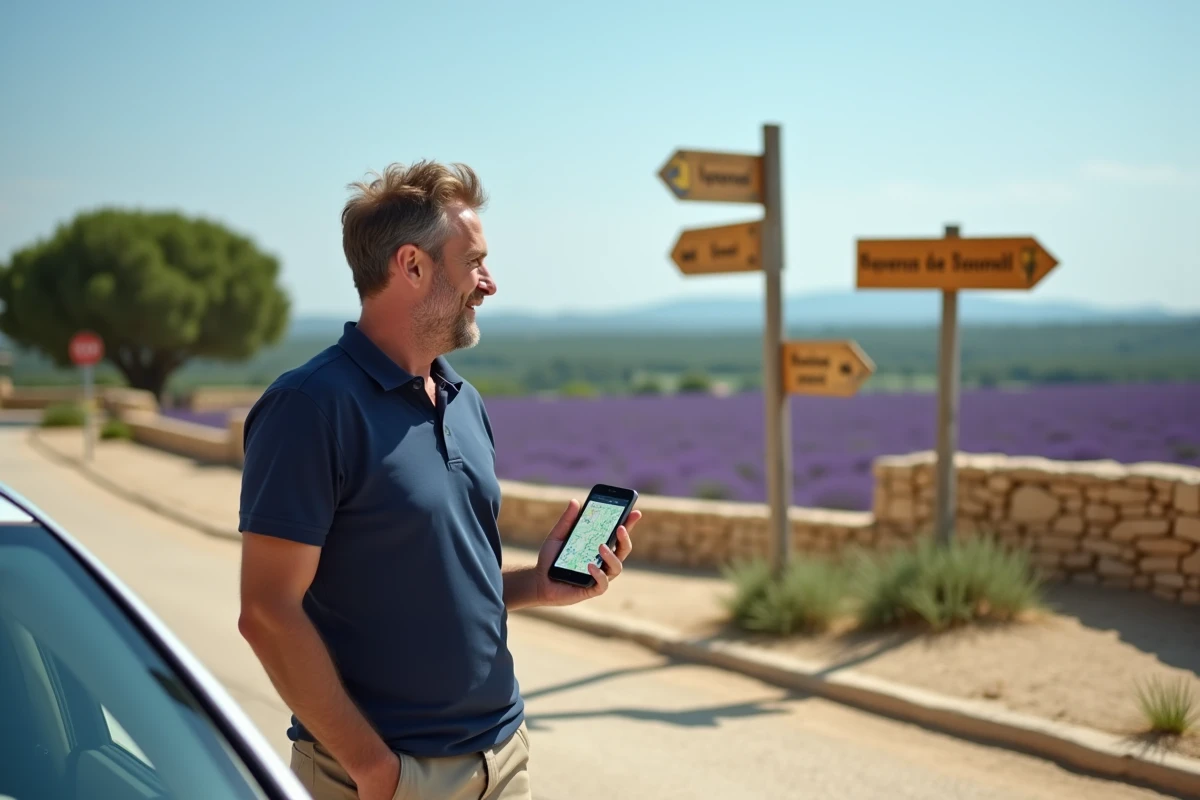
ViaMichelin offers up to three comparative routes for the same journey. Each option follows a different logic, and the choice between them significantly changes the driving experience.
- The recommended route (or quick) prioritizes the shortest travel time, using highways and expressways. It is suitable for business trips or long journeys where fatigue weighs more than the budget.
- The economical route reduces costs by avoiding toll sections and favoring national roads. Driving time increases, but the toll bill can drop to zero on certain routes.
- The scenic mode selects secondary roads deemed picturesque. Michelin relies on its historical mapping knowledge to guide users through landscapes or classified towns.
Comparing these three options side by side provides a clear view of the time-money-pleasure trade-off. A trip from Paris to Lyon, for example, does not have the same cost depending on whether you drive via the A6 or the Burgundy wine route.
Integrated tourist content: the change of 2024
Since the repositioning announced in May 2024, ViaMichelin integrates recommendations from the Michelin Guides directly into the itinerary. Restaurants, accommodations, and tourist sites appear along the calculated route, without having to leave the navigation interface.
Michelin speaks of a holistic approach to travel where the itinerary is as important as the destination. In practice, this means that the platform suggests gastronomic stops or points of interest based on your route, not just your arrival. The tool shifts from a distance calculator to a route planner.
The service is available in seven languages and covers eleven European countries, which remains useful for frequent cross-border trips from France (Belgium, Spain, Italy, Germany).
Limits of this integration
The tourist suggestions come from the Michelin database, which excludes some establishments not referenced by inspectors. A locally loved village restaurant that is absent from the Guide will not appear in the recommendations. Coverage is dense for high-end gastronomy and hospitality, but less comprehensive for alternative accommodations (gîtes, campsites).

ViaMichelin vs Google Maps and Waze: the question of personal data
In its communication around the 2024 repositioning, Michelin highlights an argument rarely addressed in classic comparisons: the protection of personal data and the European grounding of the service. The collection of navigation data is presented as more limited and transparent than that of some American competitors.
Google Maps and Waze feed their functions (real-time traffic, commercial suggestions) through massive location data collection. ViaMichelin, on the other hand, does not have the same volume of real-time traffic data. Field feedback varies on this point: some users report less responsive traffic information than Waze, while others believe that the reliability of travel times remains comparable on major French highways.
This question of digital sovereignty in the context of GDPR gives ViaMichelin a specific positioning. The choice depends on what you prioritize: maximum traffic responsiveness or sobriety in the collection of your data.
ViaMichelin account and favorite routes: what this changes in daily life
Creating an account (free) allows you to save favorite routes with their associated preferences: avoiding tolls, excluding low emission zones, vehicle type. The benefit is particularly evident for recurring trips, where restarting a full calculation at each departure represents a waste of time.
The registration retains the estimated duration, distance, and total cost of the trip as calculated. However, this data does not automatically update if toll rates or fuel prices change. You need to restart the calculation to obtain an updated estimate.
The service works equally well on the website and the mobile app, with synchronization between the two. For commuting as well as vacation planning, saving vehicle preferences avoids re-entering the same parameters with each use.
ViaMichelin remains a planning tool before being a pure driving GPS. Its strength lies in the financial and tourist preparation of the trip, where its competitors focus on real-time guidance. Depending on your needs, it can function alone or in conjunction with a more responsive traffic navigation app.