
You have spent years in an office, behind a screen, managing projects that do not reflect who you are. One day, you enter a renovated apartment and something clicks: the layout, the materials, the light. Interior architecture attracts more and more professionals each year looking to change careers, coming from marketing, real estate, or communication.
Energy renovation and interior architecture: the duo no one expected
Have you noticed that real estate listings increasingly mention the DPE rating? The tightening of energy regulations in France, particularly the gradual ban on renting the most energy-consuming homes, has a direct impact on the profession of interior architect.
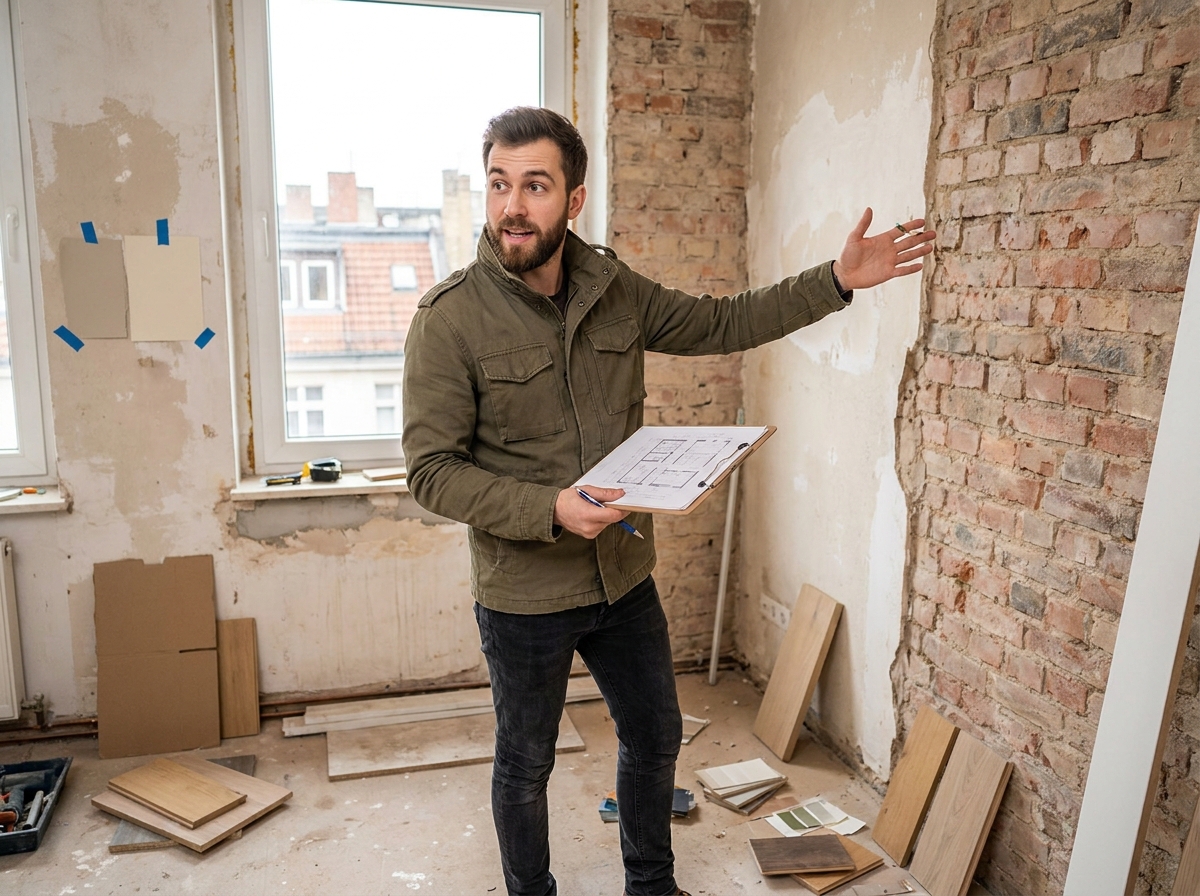
Optimizing a space is no longer just about choosing a floor covering or a wall color. The interior architect now intervenes on the thermal envelope: interior insulation, selection of bio-sourced materials, repositioning openings to capture natural light.
In practical terms, a homeowner wishing to renovate an apartment rated F or G on the DPE must rethink the entire living space. Moving a partition to integrate insulating cladding, replacing single glazing without altering a façade, selecting a lime plaster instead of standard drywall: these technical decisions are as much about energy performance as they are about design. This is where the profession takes on a new dimension, well beyond decoration.
Those considering making interior architecture a new professional project find in this regulatory evolution a concrete lever for differentiation in the market.
Home staging and real estate consulting: the hybridization of professions
In recent years, networks of real estate agencies in France have integrated interior architecture and home staging services directly into their commercial offers. The goal is twofold: to accelerate sales and increase the perceived value of a property.
Why this convergence? An empty or poorly arranged apartment sells more slowly. A 3D plan before listing changes a buyer’s perception in just a few seconds. The interior architect no longer simply delivers a finished project: they intervene upstream, as a consultant, to enhance a property even before the first visit.
This hybridization creates professional statuses that did not exist five years ago. Here are some examples of emerging positions:
- Freelance consultant combining real estate mandate and interior enhancement service, paid per project
- 3D decor package offered by real estate agents, designed by a partnering interior architect
- Comprehensive support for the seller, from volume auditing to choosing lighting for listing photos
This professional playground is much more varied than the classic decor project. The interior architect becomes a link in the real estate chain, not an isolated participant at the end of the process.
Career change to interior architecture: what training doesn’t always tell you
Specialized schools (L’École Boulle, MJM, Lignes & Formations, among others) welcome an increasing number of students already engaged in another career. The typical profile is no longer the 18-year-old high school graduate passionate about drawing. It is a thirty-something or forty-something coming from marketing, human resources, or project management.
Why does this detail matter? Because previous professional experience is a real competitive advantage. Knowing how to manage a budget, negotiate with a craftsman, keep to a schedule: these skills are not learned in a color theory class.

Transferable skills to interior architecture
Here are the skills from other professions that prove directly useful:
- Project management (planning, coordinating service providers, budget tracking) allows for overseeing a construction site without relying on an external project manager
- Client communication, honed in consulting or sales, facilitates translating a vague need into a precise technical brief
- Proficiency in digital tools (spreadsheets, presentation software, CRM databases) accelerates the adoption of 3D modeling software
Career change does not mean starting from scratch. It means reassembling existing skills around a new profession.
Working freelance or in an agency: two very different realities
The independent status attracts the majority of those changing careers. The promise is enticing: choose your projects, set your rates, work from home. The reality requires some clarification.
As a freelancer, business development takes up a significant portion of your working time, especially in the first two years. Without an existing network or a solid portfolio, landing your first project takes time. Word of mouth remains the primary client acquisition channel in this profession.
In an agency, the learning curve is faster. You work on varied projects, learn site management alongside experienced professionals, and do not have to handle accounting or follow up on unpaid quotes. In return, the scope for creativity is often constrained by the artistic direction of the organization.
Which status to choose at the start
The choice depends on your financial situation and risk tolerance. Spending twelve to twenty-four months in an agency or as a collaborator of an established interior architect allows you to build a solid portfolio before going solo. This intermediate step significantly reduces the risk of commercial failure.
Interior architecture is not a unique vocation reserved for art school graduates. It is a technical profession in full transformation, driven by energy regulations and hybridization with real estate. The best time to engage in it is when you already have a first career behind you.