The high-end safe market has taken shape around a dual requirement: meeting European burglary-resistance certifications while offering finishes worthy of designer furniture. Leather, fine woods, custom color palettes—specialist manufacturers invest as much in design as in mechanical strength.
This evolution raises practical questions about what the certifications actually cover, the installation constraints in a carefully designed interior, and how insurers value (or do not value) this equipment.
EN 1143-1 certification and fire protection: two separate guarantees
One point is often misunderstood and is worth clarifying from the outset. The EN 1143-1 standard assesses burglary resistance only, not fire resistance. A safe rated Grade III or IV under this standard may offer no protection for paper documents or digital media in the event of a fire.
Fire resistance is assessed through separate tests and distinct standards. Anyone looking to protect watches, jewelry, and notarized documents must therefore check for two certifications on the technical specifications, not just one. Luxury safe manufacturers do not always highlight this distinction, as the exterior finish tends to attract more attention.
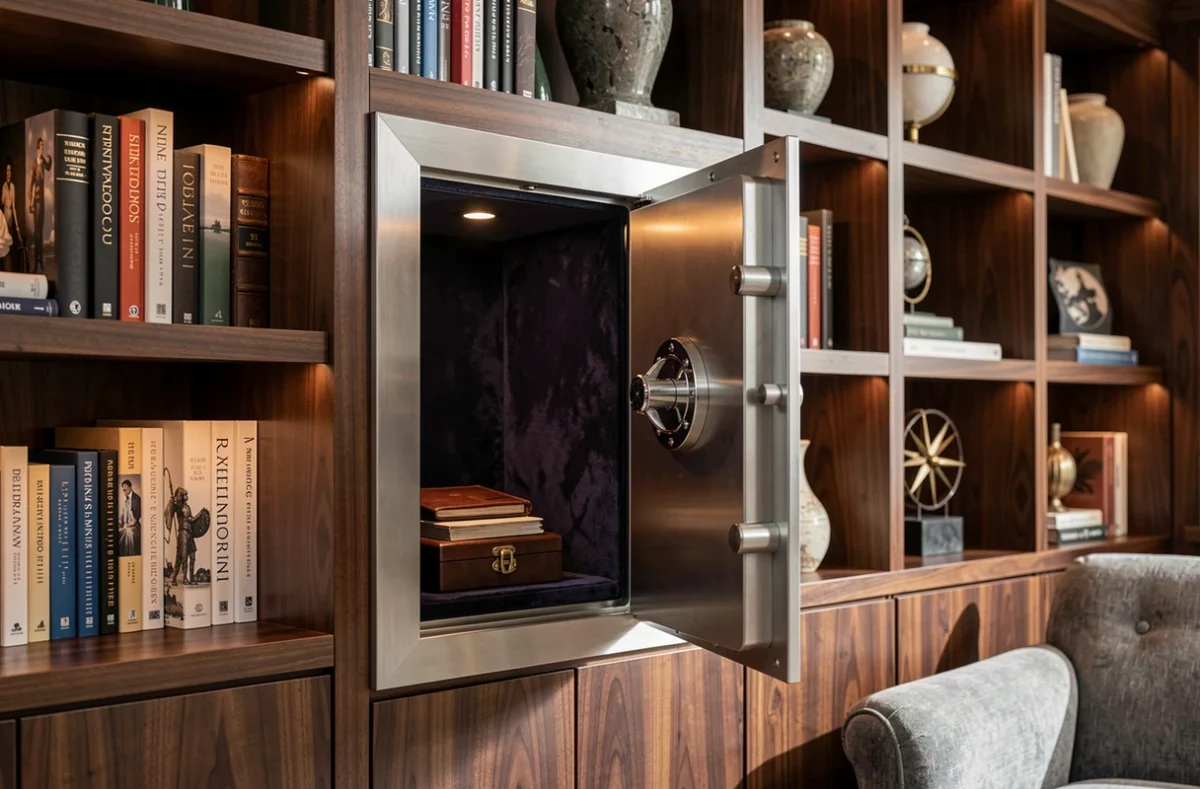
Some high-end models offer luxury safes that combine security and elegance, with leather-lined interiors and modular compartments. However, the quality of the finishing materials has no bearing on the certification level: a safe clad in Alcantara is no better rated than one made of bare steel if the load-bearing structure is identical.
Installation constraints in a high-end interior
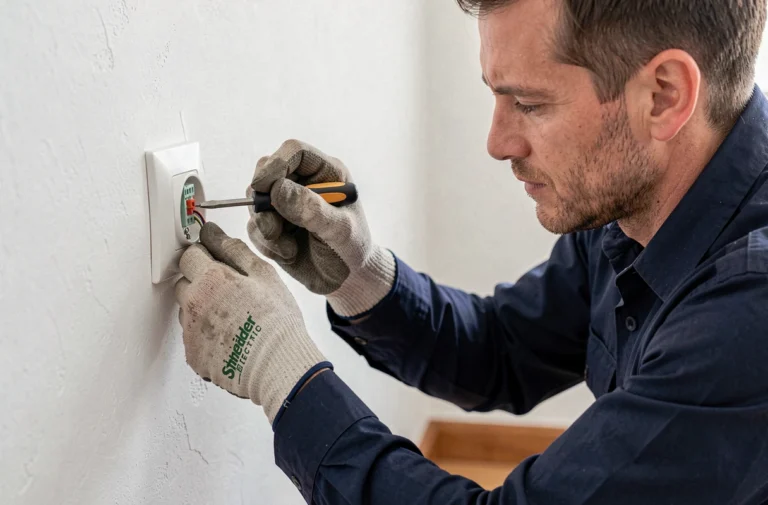
Installing a certified safe requires following the manufacturer’s precise specifications. Floor or wall anchoring, the type of fixing bolts, and the substrate (concrete, concrete block, solid brick) all determine whether the certification remains valid. A safe that is not secured according to the instructions loses its certification status, regardless of its price.
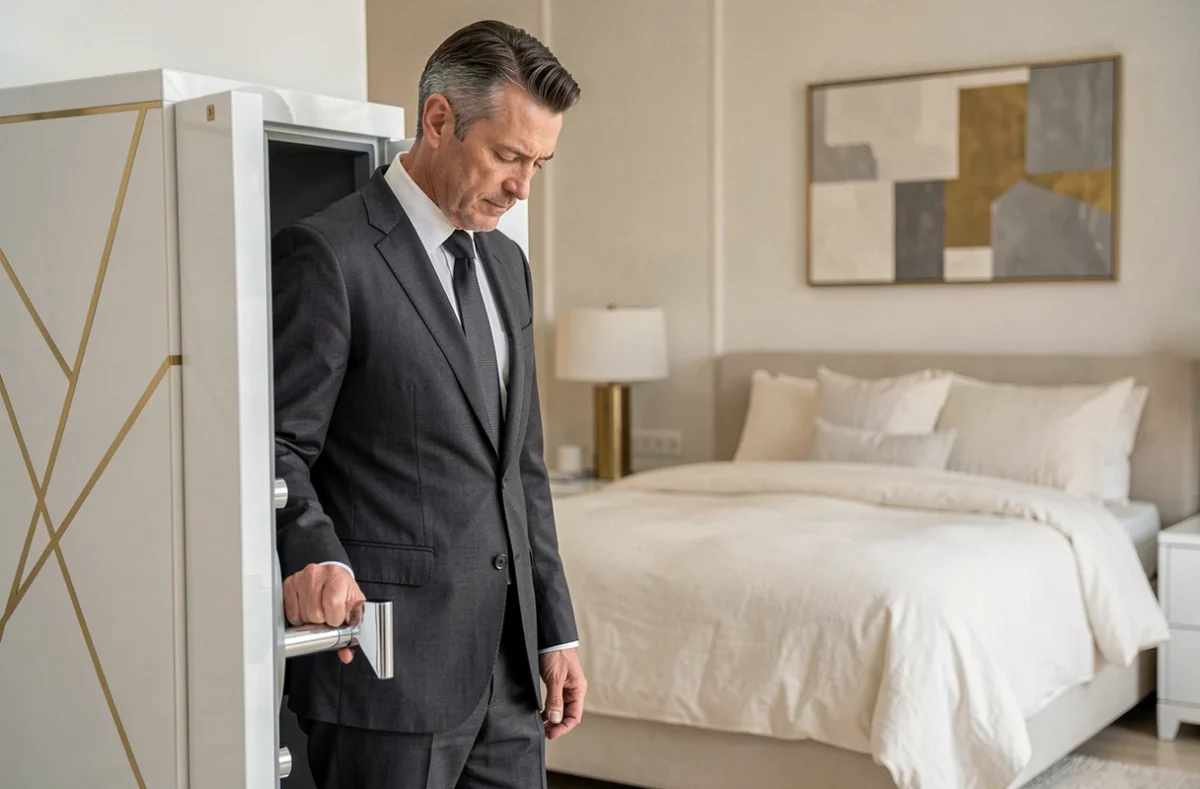
In a Haussmann-style Paris apartment or a contemporary villa, this can become a real challenge. Parquet floors laid over joists, plasterboard partitions, and irregular ashlar walls are not all suitable for standard anchoring. A preliminary assessment of the substrate is often necessary before even choosing a model.
Weight and access: technical factors to plan for
High-grade safes weigh several hundred kilograms. Moving one up a narrow staircase or into an old elevator may require partial disassembly or even the use of an external hoist. This logistics challenge, rarely mentioned in catalogs, adds cost and affects the choice of final location.
Some owners prefer to incorporate the safe during construction or a major renovation, making it possible to pour a suitable anchoring slab and conceal the unit behind a decorative panel or in a custom-built dressing room.
Resistance grade and insurable value: what insurers really require
The EN 1143-1 standard classifies safes from 0 to VI (and higher for strongrooms). The higher the grade, the greater the tested resistance to burglary tools. However, the insurable values are not set by the standard itself: the home insurance policy determines the actual coverage.
In practice, an insurer may require a minimum grade to cover declared contents above a certain value. Requirements vary from one policy to another, and several factors come into play:
- The safe’s grade under EN 1143-1 (or EN 14450 for lower-level security safes), as shown on the testing laboratory’s certificate
- Whether the installation complies with the manufacturer’s specifications, which may be checked by an expert appointed by the insurer
- Prior declaration and valuation of the contents, which must correspond to the safe grade accepted under the policy
- Whether a connected alarm system is installed, which may affect the coverage limit
Getting written confirmation of the required grade and installation conditions before buying helps avoid unpleasant surprises in the event of a claim. A luxury safe costing several thousand euros may not provide coverage for its contents if it has not been installed in accordance with the insurer’s requirements.
Design and materials: what sets the luxury segment apart
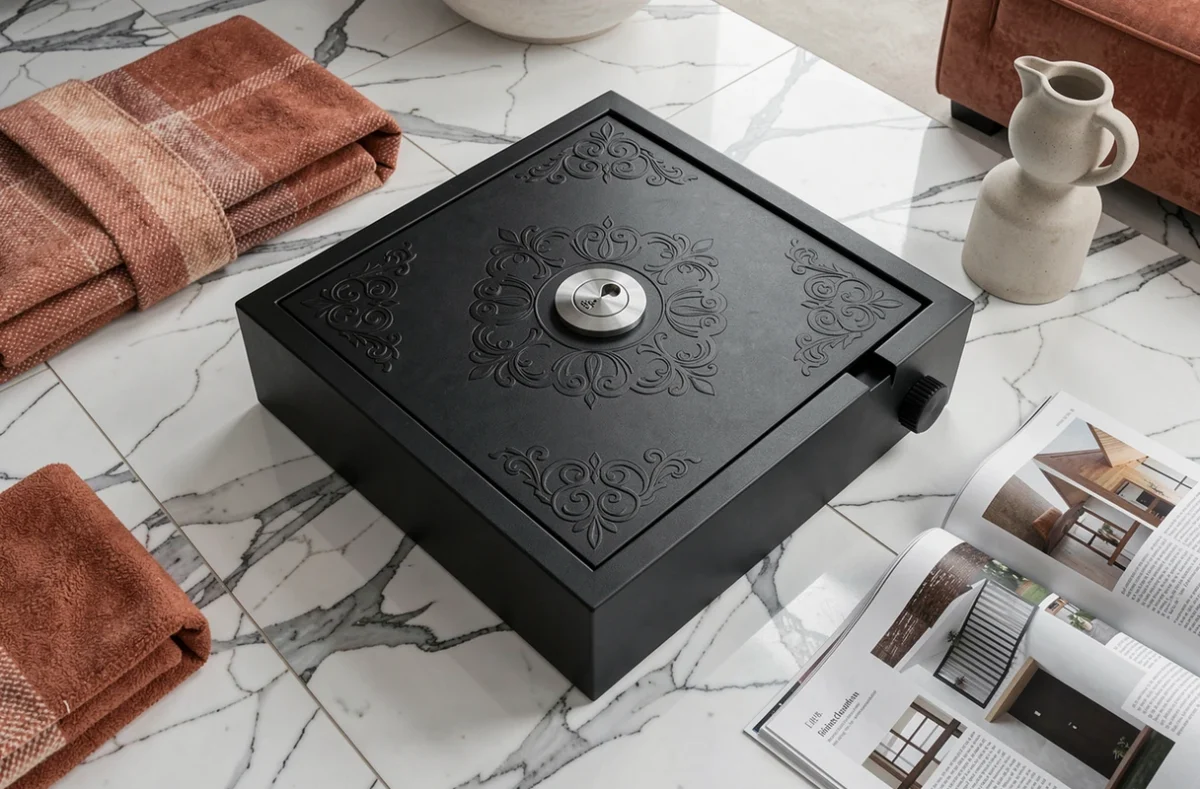
Manufacturers targeting the high-end market (Stockinger, Hartmann Tresore with its Signature Safes range, Conforti, Ferrimax Luxury Edition) focus on several areas of customization. Exterior finishes range from satin lacquer to genuine wood veneers. Interiors feature leather linings, watch drawers with rotating cushions, and modular jewelry cases.
Customization also extends to dimensions and interior layout. A watch collector has different needs from someone storing confidential documents and precious metals. Interior compartments, integrated LED lighting, and biometric locks all help set these safes apart.
Locks and access technologies
High-end models generally combine several opening methods: a certified key lock, an electronic code, and a fingerprint reader. Some also offer connectivity that sends an alert if an unauthorized opening is attempted. Access technology does not change the burglary-resistance grade, which relates to the physical strength of the structure, not just the locking mechanism.
The recent update to the EN 1143-1 standard, which introduced the optional T2 test, is worth checking in the technical specifications for newer models. This technical detail, beyond the finish and stated grade, may affect insurance coverage.
A luxury safe is first and foremost a security device. How well it fits into an interior depends as much on the preliminary technical assessment (substrate, access, anchoring) as on the aesthetic choice. Checking certifications, confirming the insurer’s requirements, and planning the installation logistics all help ensure the investment truly protects what it contains.