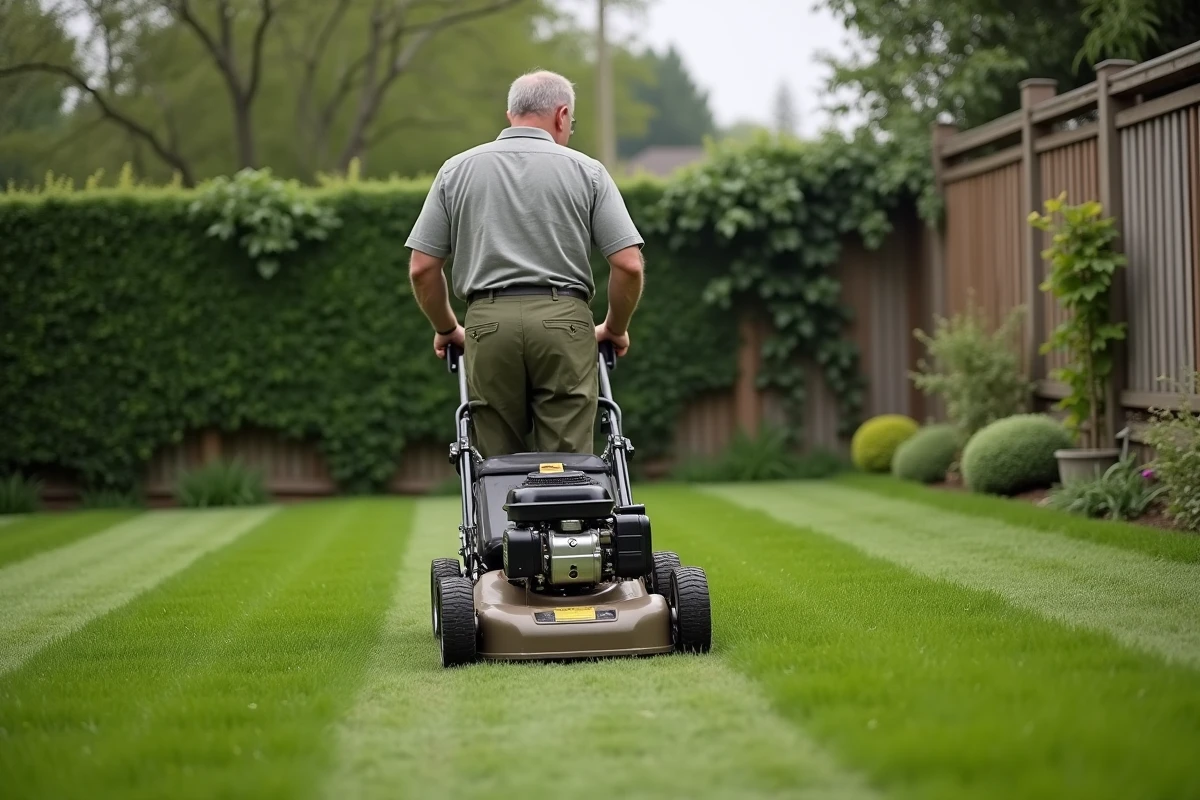
A thermal mower operates thanks to a gasoline engine, usually four-stroke, which drives a rotating blade under a metal housing. This type of machine is intended for gardens larger than what a corded electric model can comfortably cover, thanks to an autonomy limited only by the fuel tank’s capacity.
Noise level of a thermal mower and neighborhood constraints
Noise is the first parameter that most choice guides mention at the end of the technical sheet. A classic gasoline mower produces around 85 to 90 dB in operation, a level comparable to heavy road traffic.
Above 85 dB, wearing hearing protection becomes necessary for the user. For the neighbors, this volume requires adhering to strict time slots, which vary according to municipal regulations.
Some manufacturers now offer models with optimized silencers and soundproof housings, which significantly reduce noise emissions compared to traditional machines. If the garden adjoins a terrace, a pool, or a remote working space with open windows, this criterion weighs as much as the engine power. The comparisons available on tondeuse-thermique.info allow filtering models according to their declared noise level.
Engine displacement and power: adapting the machine to the terrain
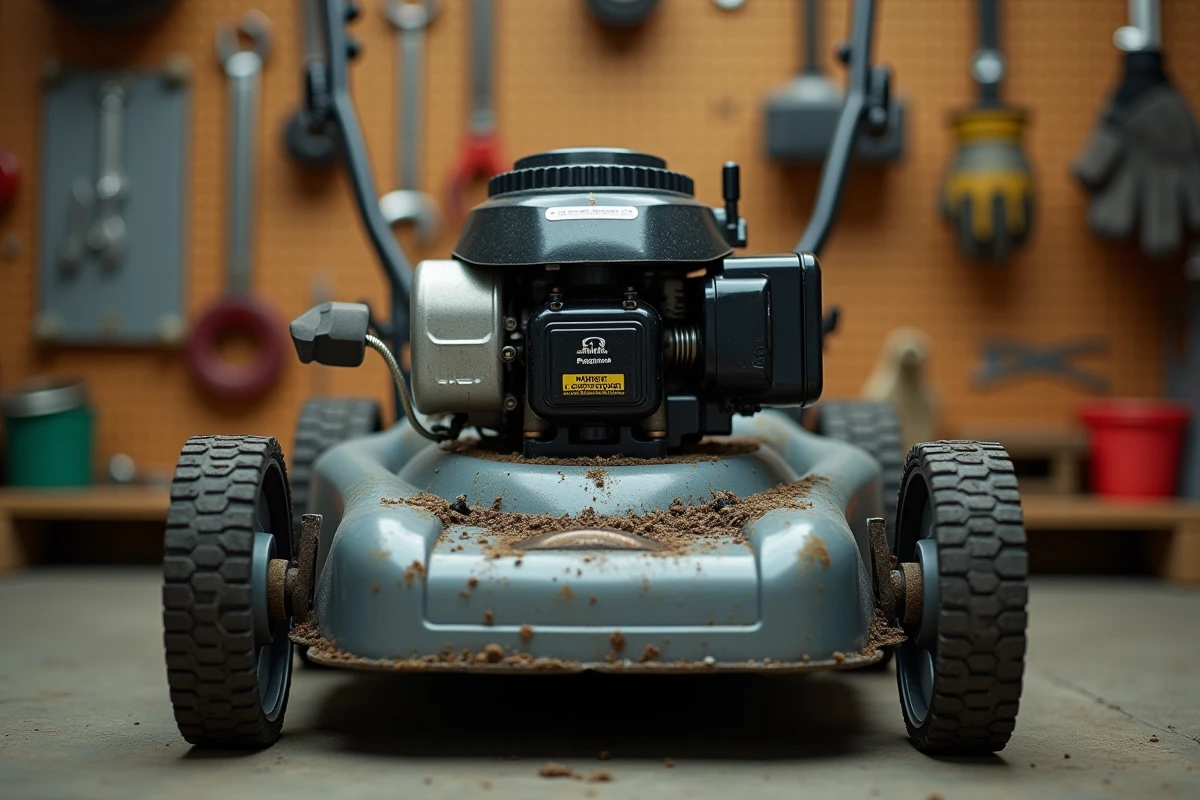
The engine displacement, expressed in cm³, determines the mower’s ability to cut thick or wet grass without stalling. A flat terrain with regularly mowed grass requires less power than a sloped garden where the grass grows freely between cuts.
Flat or sloped terrain
On a flat surface, a moderate displacement is sufficient. The engine runs at a stable speed, wear remains limited, and fuel consumption is low.
On the other hand, on sloped or uneven terrain, a higher displacement engine compensates for the additional effort required by the incline and soil irregularities. Traction on these terrains is not a luxury: a self-propelled model avoids pushing the machine uphill, reducing physical fatigue and limiting the risk of blade clogging.
Push or self-propelled
The distinction between push mowers and self-propelled mowers directly depends on the garden’s topography and the user’s physical condition. A push mower is suitable for a modest-sized and relatively flat garden. A self-propelled model becomes relevant as soon as the terrain has elevations or when the area to be mowed exceeds several hundred square meters.
Cutting width and height: two settings not to be confused
The cutting width determines the number of passes needed to cover the entire lawn. The larger it is, the fewer back-and-forth movements are required, but maneuverability decreases around flower beds, trees, and borders.
- A reduced cutting width (about 40 cm) is suitable for gardens with many obstacles, curves, or narrow areas between plants.
- An intermediate width (around 46 to 50 cm) represents the most common compromise for a medium-sized garden with a few flower beds.
- A larger width (53 cm and beyond) is aimed at large open areas where mowing speed takes precedence over contour precision.
The cutting height is adjusted according to the season and the lawn’s use. Mowing very short in the middle of summer stresses the lawn and promotes yellowing. Keeping a few extra centimeters of height during hot periods protects the root system and retains soil moisture.

Maintenance of the thermal engine: what extends its lifespan
A gasoline engine requires regular maintenance that electric models do not impose. Neglecting this maintenance shortens the machine’s lifespan and gradually degrades cutting quality.
The maintenance operations to be planned follow a predictable cycle:
- Oil change after the first hours of use, then at the beginning of each season or according to the manufacturer’s recommendations.
- Replacement or cleaning of the air filter, which clogs faster in a dusty environment or when mowing dry grass.
- Checking and replacing the spark plug when starting becomes difficult or when the engine loses regularity.
- Sharpening or replacing the blade, a point often overlooked that directly affects cutting sharpness. A dull blade tears the grass instead of cutting it, which browns the tips and weakens the lawn.
At the end of the season, emptying the fuel tank or adding a fuel stabilizer prevents the mixture from degrading during the winter months. Contaminated fuel clogs the carburetor and complicates restarting the following spring.
Ejection system and mulching: which mode for what result
Most thermal mowers offer several modes for managing cut grass. The choice between rear ejection with a collection bag, side ejection, and mulching depends on the desired result and mowing frequency.
Mulching finely shreds the grass blades and redeposits them on the lawn. These residues decompose quickly and nourish the soil, reducing the need for fertilizers. This mode works well as long as mowing is done regularly, as overly tall grass produces clumps that suffocate the lawn.
The collection bag remains the most suitable mode when mowings are spaced out or when the grass is wet. Side ejection, less common among individuals, is reserved for large areas where collection is not a priority.
The choice of ejection mode deserves as much attention as the engine power. A versatile thermal mower, capable of switching from one mode to another without tools, offers valuable flexibility depending on mowing conditions, whether it’s a quick maintenance cut mid-week or a complete mowing after several days of rain.