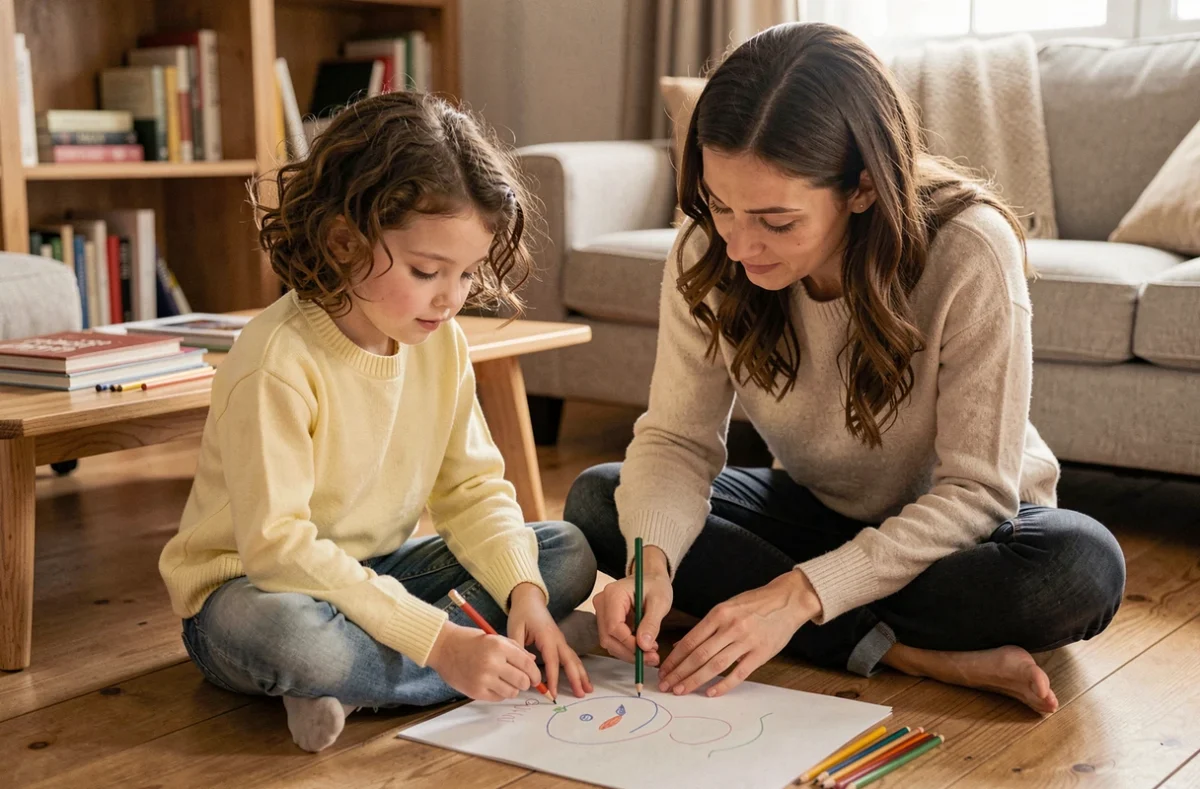
A six-year-old refuses to do his homework in the evening because his teacher told him to put his notebook away in class, while his parents insist that he work after his afternoon snack.
This kind of contradiction between home and school may seem trivial, but it can create confusion that weighs on a child more than we realize. Supporting a child day to day starts with providing consistent guidance across the different settings in their life—not simply repeating instructions at home.
Disagreements between parents, schools and professionals: protecting children from mixed messages
This situation is common: a teacher reports restless behavior, a doctor suggests a simple developmental delay, and the parents are torn between the two opinions. A child should not be made the messenger in these disagreements. When every adult is pulling in a different direction, the child is the one who absorbs the tension.
Santé publique France notes that children develop psychosocial skills in a supportive environment through coordinated efforts between home, school, leisure activities, community groups and healthcare settings. In other words, it is not all up to parents. Creating a consistent framework means communicating with the other adults involved in a child’s life.
For more advice for children from Bébé Magique on everyday topics, you can find additional guidance tailored to each age group.
In practice, when a disagreement arises between school and family, you can take a simple approach:
- Arrange a joint meeting (parents and teacher, or parents and healthcare professional) to discuss the facts, not interpretations
- Give the child a consistent message, even if the adults do not hold exactly the same views in private
- Avoid speaking negatively about the school or professional in front of the child, who may internalize these criticisms as pressure to choose sides
Everyday psychosocial skills: more than managing emotions
Emotional support for children is often reduced to one question: teaching them to manage anger or frustration. Research highlighted by Santé publique France shows that psychosocial skills go much further. They include the ability to make choices and get along with others—two abilities that can be developed through very practical situations.
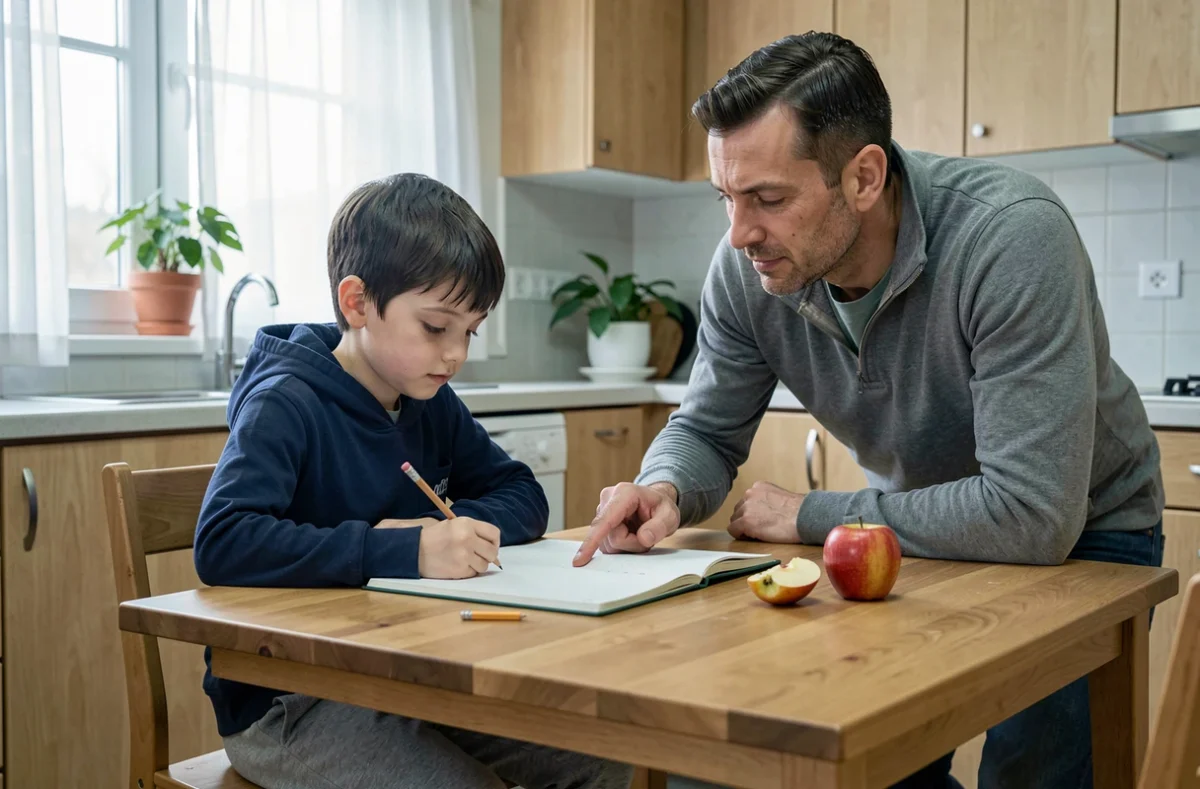
For a four-year-old, making a choice means deciding between two activities on offer, not choosing from ten options that leave them overwhelmed. For an eight-year-old, it might mean deciding whether to invite a friend over or finish a personal project, then accepting the consequences without an adult reversing the decision.
Children learn to get along with others at the dinner table, in the playground and during a car ride with a brother or sister. A conflict between children can become a learning opportunity, as long as adults do not always step in and decide for them. Asking, “What do you suggest so this works for both of you?” gives the child an active role.
Set expectations that match the child’s actual age
A common pitfall is expecting a five-year-old to reason like an eight-year-old. Children mature at noticeably different rates, even within the same family. A three-year-old who does not share spontaneously is not selfish; they have not yet developed this social skill.
Respecting a child’s natural rhythms also applies to sleep, eating and unstructured playtime. Santé publique France specifically addresses the importance of these rhythms as factors in well-being and academic success. Putting a child to bed at a regular time has a greater impact on their concentration in class than any relaxation exercise.
Early identification in teenagers: when difficulties go beyond an ordinary crisis
Not all changes in teenagers’ behavior are the same. A teen who slams their door after an argument is having a normal reaction. A teen who gradually withdraws for several weeks, loses their appetite and falls behind at school is showing different signs.
Santé publique France outlines useful warning signs for early identification. Distinguishing ordinary ups and downs from emerging difficulties is an important part of prevention. This distinction helps avoid two opposite mistakes: overreacting to temporary behavior or downplaying distress that is taking hold.
- A sudden, lasting change in sleeping or eating habits deserves particular attention
- Social withdrawal lasting more than a few days, combined with a loss of interest in activities they usually enjoy, is a reason to talk to a professional
- Repeated self-deprecating comments (“I’m useless,” “there’s no point”) are not always just teenage defiance

Start a conversation without turning it into an interrogation
Asking teenagers direct questions often has the opposite effect to the one intended. You are more likely to get through by sharing an everyday activity (a drive, preparing a meal) and letting them open up in their own time. A program highlighted by Santé publique France specifically encourages young people to ask their own questions rather than simply being talked at.
Encouraging communication between parents and children means making time for informal moments, not scheduling face-to-face discussions that feel like interviews. Teenagers talk when they feel safe, not when they are told to.
Building a child’s confidence and independence through everyday actions, not grand principles
Building a child’s confidence is not about using stock phrases (“you’re amazing,” “you can do anything”). It comes from giving them small responsibilities suited to their age: packing their schoolbag on their own, choosing their clothes in the morning or helping with a household chore without being constantly corrected.
Independence grows through repeated experiences of small successes. Every task completed alone, even imperfectly, reinforces the idea that a child is capable. By contrast, redoing what they have just done “because it wasn’t done properly” sends the opposite message.
A child who is allowed to make mistakes at home will be better equipped to handle them at school and with others. Once again, consistency between these two settings makes all the difference. When both family and school value the right to make mistakes rather than perfect results, children can move forward without the burden of conflicting expectations.
Supporting a child day to day is less about having a method and more about being consistent. It means providing steady guidance between home and school, giving them responsibilities suited to their age, and paying attention to signs that are out of the ordinary in teenagers. Often, children can take it from there when the framework around them is secure.