
An engine warning light coming on on a country road, a car that refuses to start on a frosty morning, power steering that fails while manoeuvring in a car park: every car breakdown happens in a specific context, and your first response often determines what happens next. Knowing how to read warning signs, carry out a basic diagnosis and decide whether to tackle the problem yourself or call a professional can make the difference between a minor incident and a hefty bill.
Road safety in the event of a breakdown: what to do before diagnosing the problem
When a vehicle breaks down, the priority is not to work out what caused it. It is to get to safety. Turn on the hazard lights, put on a high-visibility vest and place the warning triangle far enough behind the vehicle.
On a motorway, never stay inside the vehicle or on the carriageway. Move behind the safety barrier, on the side away from traffic. These precautions may seem basic, but they are often overlooked in the heat of the moment.
Once the area is safe, you can start looking for clues. Was the engine smoking before it stopped? Was there a smell of burning rubber? A repetitive metallic noise? Noting these symptoms makes it easier for the breakdown technician or mechanic to identify the problem. You can also consult this useful resource page: https://www.aide-auto.com for guidance on an initial diagnosis based on the type of vehicle.
Diagnosing common car problems: battery, starter motor and overheating
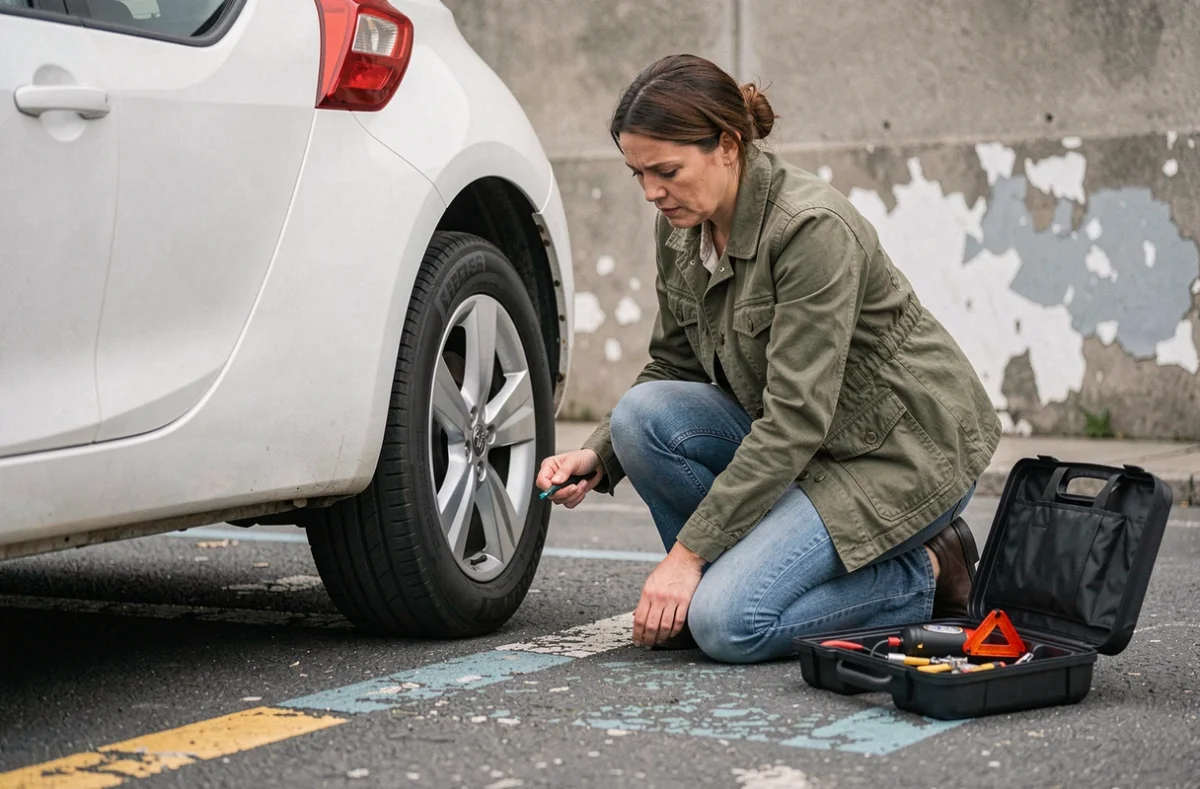
Most everyday breakdowns involve just a few components. Identifying them can often save time and avoid an unnecessary tow.
Flat battery or starter motor problem
A sharp click when you turn the key, without the engine starting, usually points to a flat battery or a worn starter motor. If the headlights come on normally, the starter motor is the main suspect. If the entire dashboard stays dark, the battery is the likely cause.
A set of jump leads in the boot can resolve most battery-related problems. Connect the red lead to the positive terminal of the flat battery, then to the positive terminal of the donor vehicle. Connect the black lead to the donor vehicle’s negative terminal, then to an unpainted metal part of the broken-down vehicle (never directly to the negative terminal of the flat battery, to avoid sparks near hydrogen gas).
Engine overheating and temperature warning light
If the temperature gauge enters the red zone, stop as soon as it is safe to do so. Switch off the engine, wait for it to cool down, then check the coolant level in the expansion tank. Opening the radiator cap while the engine is hot can cause boiling coolant to spray out.
If the level is low and there is no visible leak, topping it up with water can help you reach a nearby garage. Repeated overheating points to a problem with the thermostat or water pump, which requires workshop attention.
Fuel supply problem
If the engine gradually loses power, struggles when accelerating or will not idle, a clogged fuel filter or faulty fuel pump is often the first thing to suspect. On a diesel vehicle, air entering the fuel system can cause similar symptoms. These problems are often beyond the scope of a basic DIY diagnosis and require a fault-code reader (OBD scanner) to confirm.
Electric car breakdowns: why the usual precautions are different
A broken-down electric car does not pose the same risks as a petrol or diesel vehicle, and safety procedures differ in several ways.
Towing most electric vehicles with their wheels on the ground is prohibited. Turning the drive wheels while the propulsion system is inactive can damage the electric motor or reduction gear. The vehicle must be transported on a flatbed truck.
If the high-voltage battery fails completely, the vehicle loses not only propulsion but also power steering and power-assisted braking, which rely entirely on electrical power. In a petrol or diesel vehicle, steering and braking remain partially operational even with the engine off, thanks to hydraulic systems or residual mechanical assistance.
- Never try to open or handle high-voltage components (orange cables): the voltage is far above the lethal threshold, and only qualified technicians may work on them.
- If an electric vehicle is involved in an accident, tell the emergency services so they can adapt their response procedures.
- Check the owner’s manual for the manufacturer’s procedure for activating towing mode, which varies from model to model.
Car repairs: knowing what you can handle yourself and what you can’t
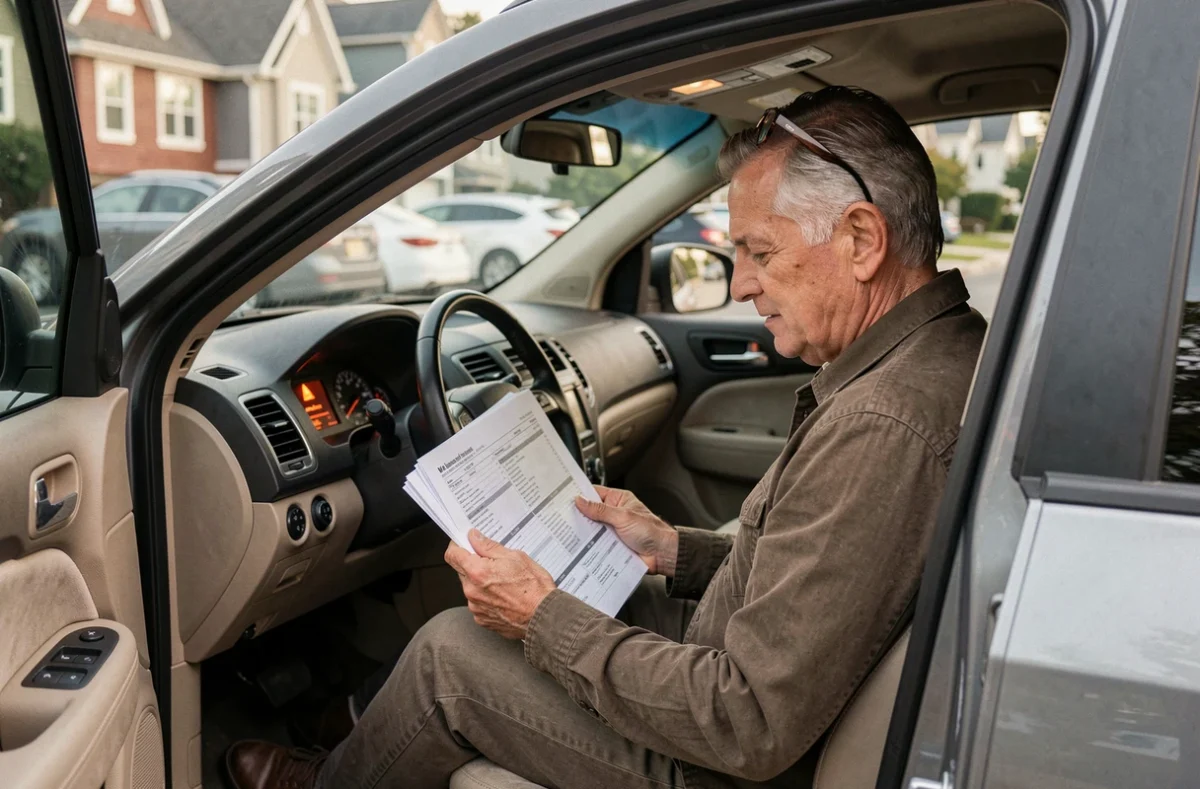
Changing a flat tyre, replacing a headlight bulb, charging a battery or topping up a fluid level: these tasks do not require specialist training and can be done with the vehicle’s basic tools.
However, any work involving the braking system, fuel injection, transmission or onboard electronics should be carried out by a suitably equipped professional. An incorrect diagnosis of the braking system puts the driver and other road users in direct danger.
An OBD diagnostic tool can read the fault codes stored by the vehicle’s control unit. Basic readers display the raw code, but interpreting it correctly requires knowledge of the vehicle’s systems. The same code could indicate worn spark plugs, an air leak in the intake manifold or a faulty injector.
Keeping a notebook in the glove compartment to record any issues you notice (date, mileage, symptom and conditions) helps build a service history. This makes diagnosis at the workshop easier and avoids costly back-and-forth visits for tests and guesswork.
Whether the vehicle is petrol or diesel, hybrid or electric, the approach is the same: observe, get to safety, identify what you can handle and leave the rest to a professional. A problem dealt with early almost always costs less than one ignored for weeks.