The proliferation of online fitness content has made sorting through it more complex than the training itself. Between AI-driven adaptive programs, institutional platforms, and music synchronization tools, the landscape of resources has radically changed since 2023. We take stock of what truly deserves your screen time.
AI Fitness Coaching: What Adaptive Programs Change
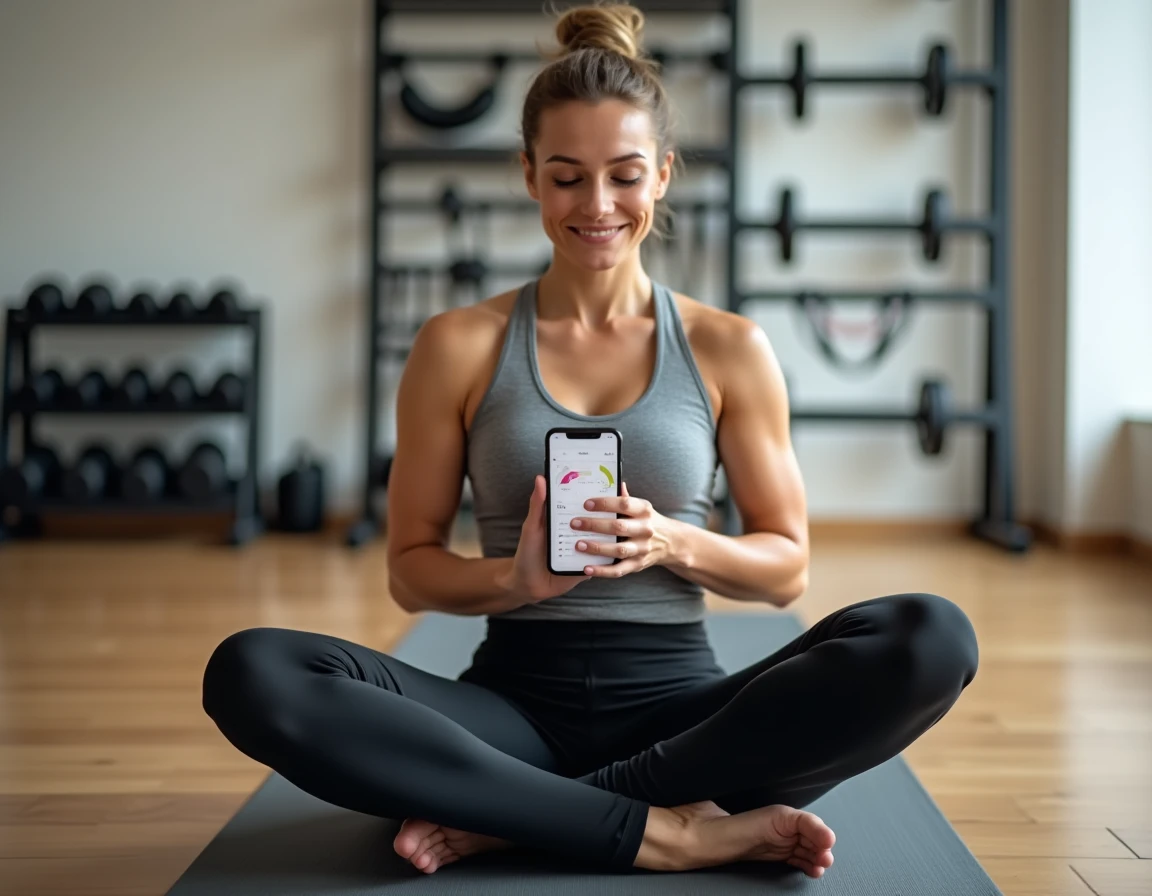
AI-based coaching apps no longer just offer predefined sets. They analyze technique in real-time via the phone’s camera, adjust load and volume based on accumulated fatigue, and modify the program week after week without manual intervention.
A review published in 2023 in the Journal of Medical Internet Research confirms that adaptive programs significantly improve adherence to practice among beginners, compared to static videos or training PDFs. The mechanism is simple: a program that reacts to your performance creates a feedback loop that passive content cannot offer.
We recommend checking three points before choosing an adaptive app:
- Does motion detection rely on the camera or just a post-session questionnaire? Only the first option truly corrects technique.
- Does the program incorporate fatigue management (automatic deload, volume reduction) or does it simply increase difficulty linearly?
- Are training data exportable to other tools (smartwatch, spreadsheet) for longitudinal tracking?
To explore varied programs and compare available training approaches, Y a du Sport’s fitness resources cover a wide spectrum of methods, from bodyweight training to gym weightlifting.

Synchronized Workout Playlists: Real Impact on Training Consistency
Appropriate musical accompaniment increases the likelihood of maintaining a routine over several months. This is not a coach’s intuition, but a finding from sports psychology studies published between 2022 and 2024.
Since 2022-2023, Spotify, Deezer, and Apple Music have launched workout features that go beyond simple thematic playlists. The tempo syncs with running cadence, and some integrations with wearables adjust tracks based on heart rate.
What Works and What is Just a Gadget
Tempo-cadence synchronization has a measurable effect on perceived performance: you maintain a more consistent pace without conscious effort. In weightlifting, the utility is more debatable. A track at 140 BPM does not make your squat more effective.
The real motivational lever lies in the ritual. Launching a dedicated playlist sends a cognitive signal to start the session. This conditioning through musical association reinforces the training habit far more than the tempo itself.
Institutional Fitness Resources: Often Overlooked Public Programs
Since 2023-2024, Santé publique France and the Assurance Maladie have strengthened their platforms for free fitness resources. These programs target activity resumption for sedentary individuals and those who are overweight, with a progressive approach that most fitness influencers do not offer.
The value of these resources lies in their medical design. The sessions incorporate calibrated progression levels, alerts on contraindications, and accessible vocabulary without sacrificing rigor.
Limitations to Know
These programs remain conservative in terms of loads and intensity. An intermediate practitioner with a goal of gaining mass or performance in weightlifting will not find a way to progress. Their strength is in supporting the first six months of physical activity, the phase where the dropout rate is highest.

Tabata Method and Bodyweight Training: Filtering the Signal from the Noise
The Tabata method (20 seconds of maximum effort, 10 seconds of rest, 8 cycles) remains one of the most sought-after protocols online. The problem: most videos labeled “Tabata” do not adhere to the intensity required by the original protocol. A true Tabata requires maximum capacity effort, not squats at moderate speed.
For effective bodyweight training, we observe that the most reliable resources share three characteristics:
- They specify the progression variable (time under tension, range of motion, unilateral) rather than simply adding repetitions.
- They program exercises by movement pattern (push, pull, hinge, squat) rather than by isolated muscle group.
- They include a deload or light week protocol, indicating that the program aims for the long term.
A program without recovery management is an incomplete program, regardless of the equipment used.
Building Your Own Selection of Resources
Rather than subscribing to ten channels, we recommend locking in three complementary sources: an adaptive app for program structure, an institutional resource for health benchmarks, and content specialized in your training method (weightlifting, calisthenics, HIIT). Everything else is noise.
The most reliable selection criterion remains transparency about sources. A fitness resource that cites its references (studies, coach certifications, programming methodology) deserves more attention than content that promises results without explaining the mechanism. The quality of a resource is judged by its programming rigor, not by its video production.